Human Rights and Nuclear Testing
Originally Published on November 11, 2019
INTRODUCTION
Malcolm X, the great American Minister and Human Rights Activist, once said, “The media’s the most powerful entity on earth. They have the power to make the innocent guilty and to make the guilty innocent, and that’s power. Because they control the minds of the masses.” In the 21st century, technology and media are two primary catalysts for change in human civilization. This is seen in every aspect of life, from political campaigns, political leaders, activists or influencers – the list goes on. Media outlets focus on the news that they know will sell to the public – information that sells. As such, it is not uncommon for large scale issues to be brushed under the rug. HanVoice aims to overcome the lack of media attention towards North Korea’s human rights crisis. In aiming to bridge this gap in media coverage, this post specifically explores human rights violations in North Korea and a discussion on international media focused primarily on the Nuclear Talks.
HUMAN RIGHTS ABUSES

Photo by Oscar Chan from Pexels
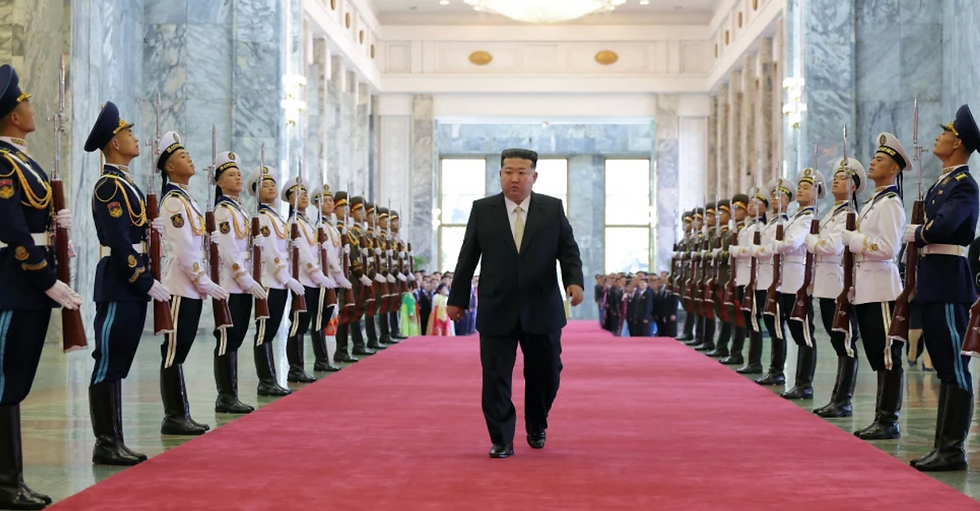
The non-governmental organization, Human Rights Watch, has called North Korea “one of the world’s most repressive states”. It has limited rights and freedoms for all its citizens, with the most prominent restrictions on freedom of expression, freedom of assembly and association, and lastly freedom of religion.The state is organized in a way which doesn’t allow opposition against the leader, Kim Jong-Un. Despite signing many human rights treaties, North Korea fails to keep its promises with the United Nations. The inequality has emerged from the class system which categorizes its citizens by their loyalty towards the leader. These divisions are known as “core,” “wavering” and “hostile”. The leader of the country is known as “Dear Leader”, a phrase which enforces patriotism in its citizens. Kim Jong-Un makes sure his citizens are loyal only to him, with the use of the “Ministry of People’s Security”. This allows each citizen to spy on each other despite relationships between the individuals. If the government discovers any thing which is considered harmful towards the Dear Leader, the individual can be imprisoned in a concentration camp, or their class ranking will be reduced. Every single news source in North Korea is controlled by the leader of the country in order to make sure these outlets do nothing but praise the Dear Leader.
MILITARY AND NUCLEAR TESTS

Most of North Korea’s budget goes toward the military, making it the world’s fourth largest. It has a history of testing missiles which demonstrates the country’s ability to launch missiles, harm other countries and compete with the United States. According to Council on Foreign Relations, North Korea has made 11 launches since May 2019. The country has knowledge on how to make uranium or plutonium, which are the necessary elements for making nuclear weapons. Last year in Singapore, in June 2018, President Donald Trump had his first meeting with Kim Jong-Un. America promised that it will give North Korea “security guarantees” and will end all “military exercises with South Korea”. American leader President Donald Trump stated that denuclearization in North Korea would begin in six months, which clearly has not begun.
CURRENT SITUATION OF NUCLEAR TESTING & HUMAN RIGHTS
The initial disagreement between the two countries started when North Korea gave a defence that it would not destroy its nuclear program unless the United States abandoned its more than 25,000 troops from South Korea and protect North Korea’s security. On October 2nd, North Korea tested its new type of submarine launched ballistic missile (SLBM) which landed in the waters of Japan. Prime Minister of Japan, Shinzo Abe, held a press conference to state that North Korea’s launch violated United Nations resolution. On October 4th, mediators from the United States and North Korea met in Stockholm in Sweden to discuss the disarming of the nuclear system. The United Nations would defer all the sanctions on Pyongyang’s exports including textile and coal, if North Korea would be willing to dismantle all of its nuclear systems, including the main Yongbyon nuclear facility. This offer also brought two outcomes. Firstly, even if North Korea is willing to remove its nuclear program before accepting any “sanctions relief”, there is no guarantee that it will remove all of its nuclear activities. Secondly, this offer is sensitive because North Korea will take more than three years to dismantle all its nuclear facilities. The western community does not know exactly where all the North Korean nuclear buildings are located. In order to close these facilities the inspectors would have to be given some freedom to travel around the country and visit suspicious sites, which may strain relations with North Korea.
During all of these talks, the United States of America has failed to talk about the human rights issues taking place in North Korea. The United Nations Commission of Inquiry has found that despite what was promised in North Korea’s constitution, no freedom, nor rights are being provided to its citizens. Therefore, the International Bar Association’s War Crime Committee is setting another inquiry which will explain in more depth of what the United Nations found in its own inquiry, although it will focus more on what happens in detention centres. The real question is, why hasn’t the United States taken any steps in addressing these issues? Presently, all over the media, North Korea is being followed up with the nuclear talks and not human rights abuses.The international community has failed to follow up with the reports which expose the truth about human rights in North Korea.
SOURCES
Ochab, E. U. (2019, October 7). Who Will Address The Issue Of Mass Atrocities In North Korea? Retrieved from https://www.forbes.com/sites/ewelinaochab/2019/10/06/who-will-address-the-issue-of-mass-atrocities-in-north-korea/#61edaf2623d8.
Regan, H., Ripley, W., Browne, R., & Kwon, J. (2019, October 3). North Korea says it test fired a new type of submarine-launched ballistic missile. Retrieved from https://www.cnn.com/2019/10/02/asia/north-korea-missile-launch-intl-hnk/index.html.
What’s the Status of North Korea’s Nuclear Program? (n.d.). Retrieved from https://www.cfr.org/backgrounder/north-koreas-military-capabilities.

Comments